
Blown-in insulation in El Monte CA - a clean, sealed attic that holds back the heat
Hot rooms upstairs and a power bill that climbs every summer usually start in a thin attic. We seal it, then fill it evenly.
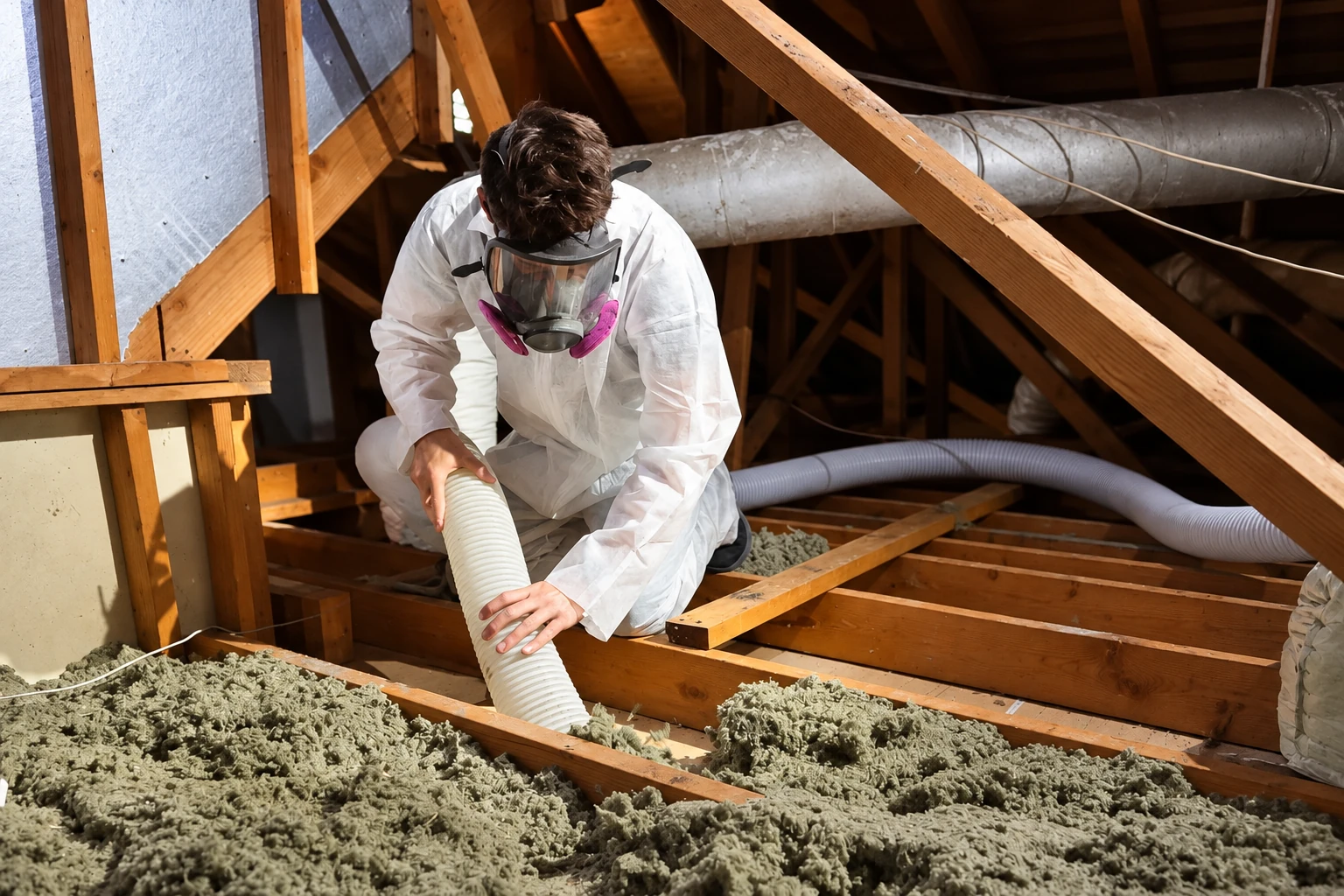
What is blown-in insulation, and will it help my El Monte house?
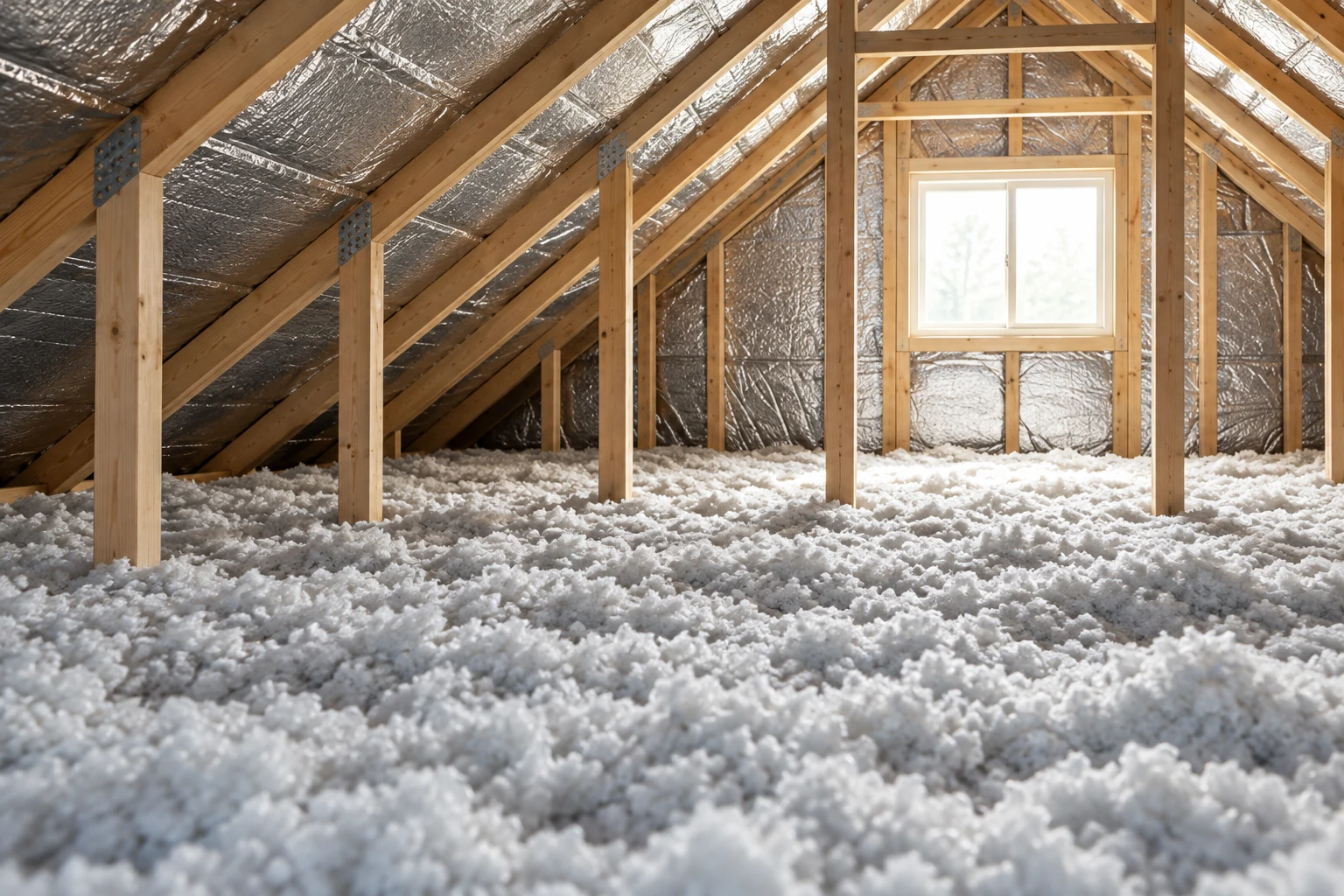
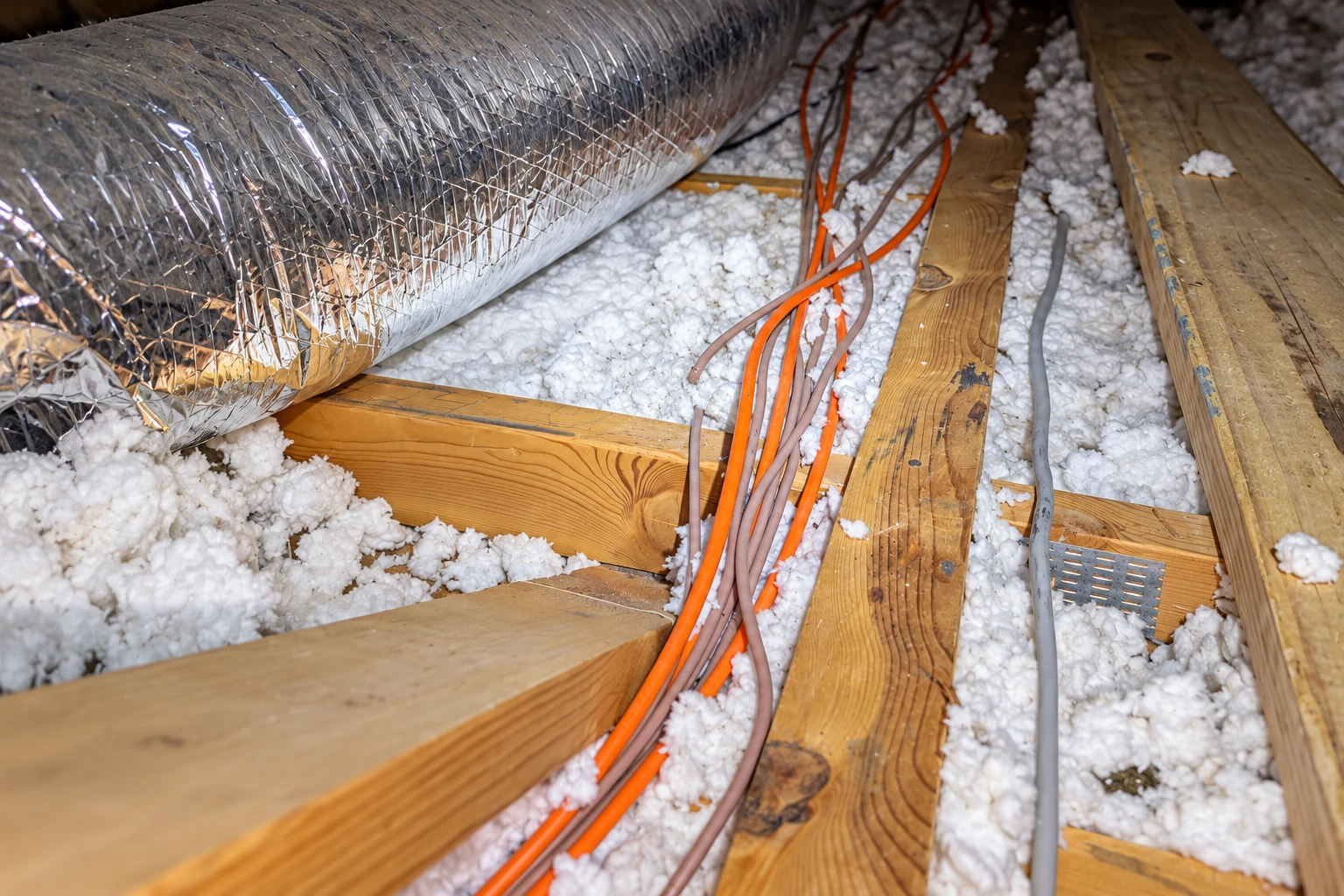
Blown-in insulation is loose cellulose or fiberglass blown through a hose across your attic floor, and in an El Monte house with a thin attic it helps the attic hold back heat so the rooms below stay cooler. Many older homes have little or no insulation up there, which is why the attic is usually the first place we look.
Most calls to Expert El Monte Insulation Services start with a hot room upstairs or a summer power bill that keeps climbing, and in an older house the attic is usually behind it. The price moves with the size of the attic, how many gaps need sealing, how easy it is to get up there and whether the old insulation can stay or has to come out first. The schedule turns on the same things, plus anything we find that has to be fixed before we cover it, so the estimate happens in your attic and that's where you get your own number.
How we do blown-in insulation
I start in your attic, checking whether the old insulation is clean enough to stay or has to come out, and whether anything up there is unsafe to cover. Next our crew does the air sealing, closing the holes that run through the attic floor, because fill laid over open gaps just has air moving through it. We set baffles, guides at the roof edges that keep the eave vents open and the fill out of the eaves, then blow in an even layer that's as full at the edges as it is in the middle. When we're done, you can go up and read the depth markers yourself.
If your walls or crawl space need help too, our home insulation work looks at the whole house instead of just the attic. When the old layer is soaked or full of droppings, our insulation removal crew bags it out and clears the attic floor before anything new goes in.
Why El Monte homeowners call Expert El Monte Insulation Services for blown-in insulation
I check the attic before quoting
I come out myself, go up in the attic and write the estimate from what's actually there, then I'm on the job with my crew for the install. You hear any bad news before we start, and you know what you're paying for.
Builder background, in business since 2020
I spent years insulating new houses for builders before starting this business in 2020 to work on homes people already live in. An existing attic hides things a new one doesn't, like old wiring, droppings and buried vents, and that's the work we know.
Licensed and insured in California
We're licensed and insured, and when something in an attic looks unsafe we stop and tell you instead of burying it. California's contractor board treats insulation as its own license classification, C-2, which is worth knowing when you compare contractors.
El Monte permits pulled for you
When a job needs a permit, we pull it through the city's Building and Safety office and set up the inspections, and I'll tell you at the estimate whether yours does. The city takes permit applications in person, so that trip is ours, not yours.
On this job the order matters more than the material, so the attic gets checked and sealed before any fill goes in, and the work is backed by our satisfaction guarantee. We're based in El Monte and work in the cities around it, so call (626) 416-2112 or send us the details with your home's age and anything you know about the attic wiring or old insulation.
Get a free on-site estimate for blown-in attic insulation
We get back to you within one business day, and the estimate is free, done in person, with no pressure and no obligation. Once we've set a time, I come out, go up in your attic and write the estimate myself, and I tell you straight what I find.
Blown-in attic work up close
Questions before you book blown-in insulation
How much does blown-in insulation cost in El Monte?
Blown-in insulation in the Los Angeles area usually costs about $1,600 to $3,600 per project. That's the regional range for a whole job, not our price, and your own number comes from the estimate. California's contractor board caps a home improvement down payment at $1,000 or 10 percent of the contract, whichever is less, and later payments have to be tied to work done or materials delivered.
Do I need to seal my attic before adding blown-in insulation?
Yes, guidance for existing vented attics calls for sealing the holes through the attic floor before any insulation goes in. Sealing them saves energy, lowers your bills and helps keep moisture problems out of the attic. It's easiest to do in the same job, before the fill covers everything.
What happens if my attic has knob and tube wiring or vermiculite?
We don't blow insulation over either one until it's dealt with. One national checklist says to hold off while active knob and tube wiring is in use until it's replaced or properly boxed, and to stop work over vermiculite, a pebbly loose fill that may contain asbestos. If you know your house has either, tell us when you call so we can plan for it.
How do I know if my old attic insulation can stay?
It can stay if it's in good condition, and that's one of the first things I look at in your attic. Attic insulation is often fouled with construction debris, plaster scraps or animal droppings, and when it is, it comes out so the problem doesn't get buried under new fill. Clean insulation we pull back to seal gaps can go back in.
What is the best choice for an attic, spray foam or blown-in insulation?
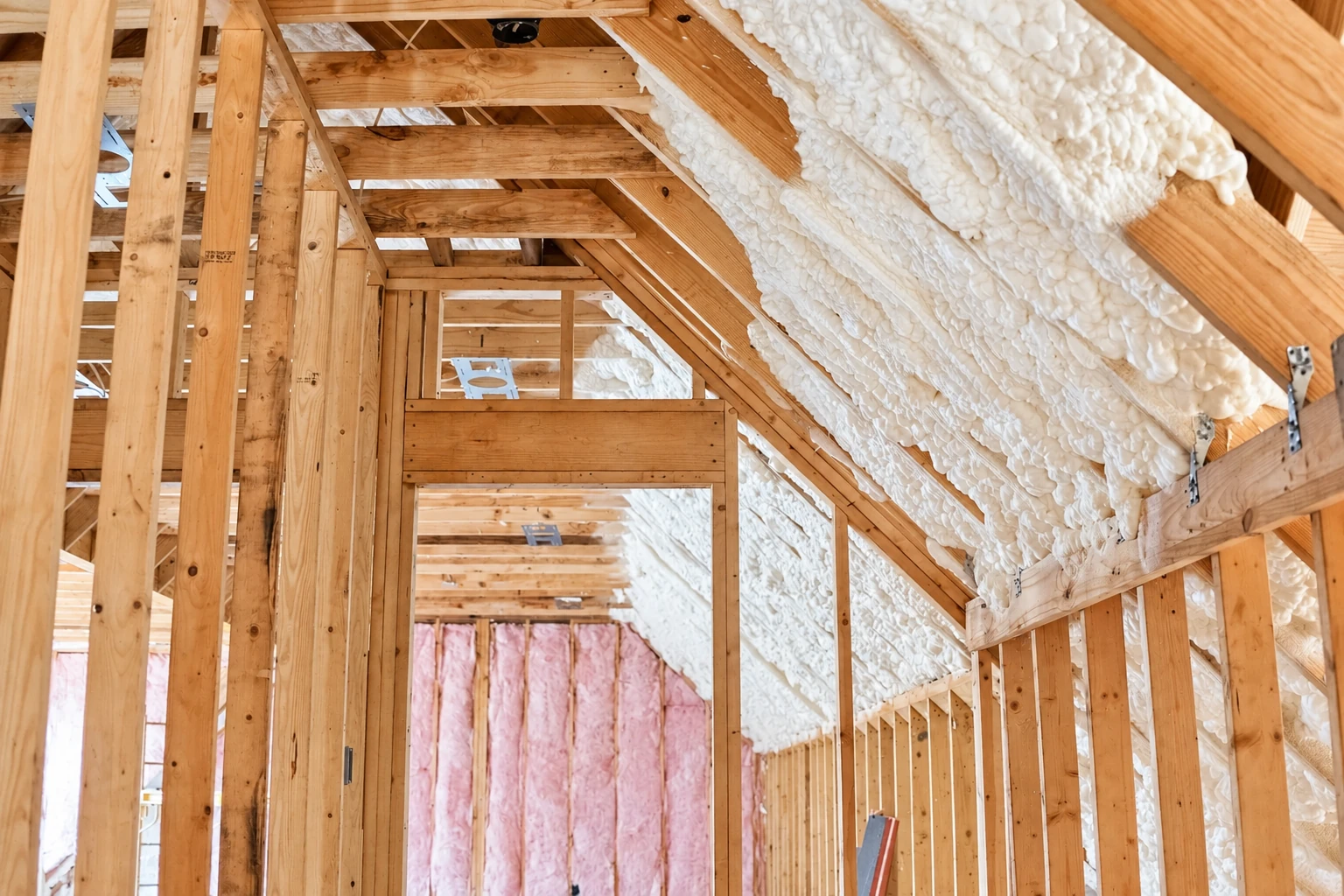
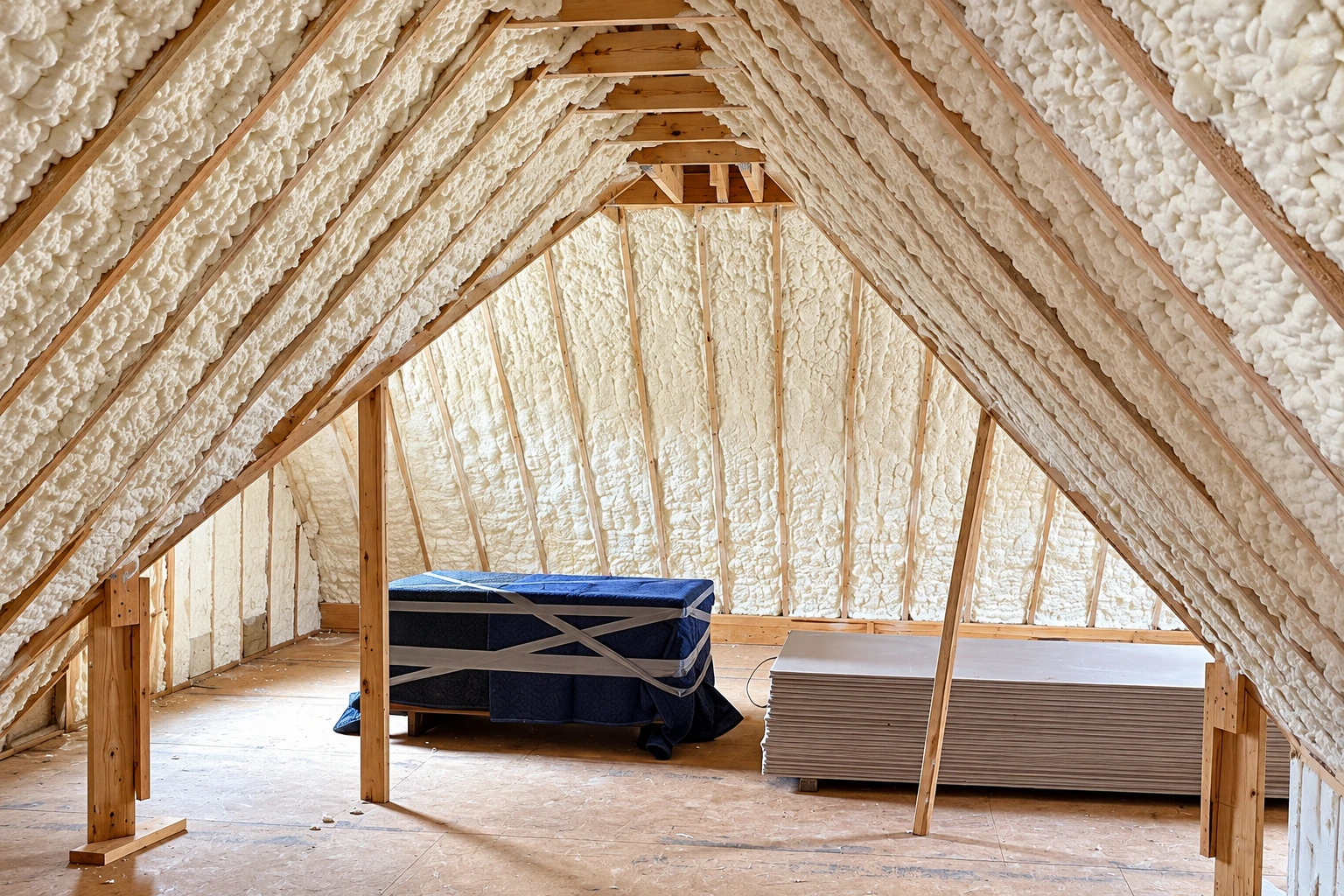
For most attics, sealing the gaps and blowing in loose fill gets you more for the money than foam. Foam costs more because it seals and insulates in one step, so it earns its price when your ductwork runs through the attic. It also helps where the roof sits too low at the edges for enough blown fill, since closed-cell spray foam or rigid foam board can cover the top of the wall there instead.
What causes upstairs rooms to stay hot even with insulation in the attic?
Often it's the way the insulation went in. Open gaps around lights, pipes and the hatch let air move straight through it, and fill that's deep in the middle but thin along the edges leaves the outer rooms exposed. Buried eave vents can also trap heat and moisture up there, so we look for all three when we go up.
Related insulation work
- Home insulation
For drafty rooms and cold floors the attic alone won't fix, we look at the walls, the crawl space and the attic together.
- Insulation removal
If your attic insulation is wet, flattened or fouled by animals, clearing it out first gives the new fill a clean start.